
WHAT ACTUALLY HAPPENS DURING A VIDEO PRODUCTION PROJECT.
by Freddy SImpkin - Junior Producer
WHY THE PROCESS MATTERS MORE THAN MOST BUSINESSES THINK.
Most businesses think video production starts when somebody arrives with a camera.
It doesn’t.
By the time filming begins, the most important decisions should already have been made. The audience should be clear, the purpose of the video should be understood, and everyone involved should know what the content actually needs to achieve.
The filming day is the visible part of the process, so it is naturally the bit clients think about first. But good video production starts much earlier than that. Without proper planning, even a polished video can end up feeling vague.
A promotional video for a website needs a different approach from a recruitment video. Social media content needs to be structured differently from a case study. Treating every project as “just a video” is where a lot of business content starts to go wrong.
THE FIRST CONVERSATION SHOULD NOT BE ABOUT CAMERAS.
The first conversation in a video production project is where the most useful information usually comes out.
This is where the production company should be trying to understand the business, not just the brief. Who is the audience? Why is the video being made now? What are customers asking before they buy? Where will the final content actually be used?
These questions shape the whole project.
A business might think it needs a general promotional video, when actually the real issue is that customers do not understand one specific service. Another company might ask for one main video, when the shoot could be planned to create useful social content as well.
This is why a good video production company should not just take an order and disappear until filming day. The thinking at the start is part of the value, because it helps avoid a very common problem: making the wrong video very professionally.
PRE-PRODUCTION IS WHERE THE PROJECT TAKES SHAPE.
Pre-production is the planning stage before filming, and it has a much bigger impact on the final video than most people realise.
This is where the creative direction is developed, the filming approach is agreed, interview questions are prepared, locations are planned and the schedule is worked out. It is also where the practical details are sorted, which usually makes the filming day much calmer for everyone involved.
The level of planning should match the scale of the production. A small interview-led video does not need to be treated like a television advert. Equally, a larger commercial video production project should not be planned on the back of a vague email and a good feeling.
Good pre-production gives everyone confidence. The client understands what is happening, the crew knows what needs to be captured, and the people appearing on camera are not walking into the day completely blind.
THE FILMING DAY IS NOT JUST ABOUT GETTING NICE SHOTS.
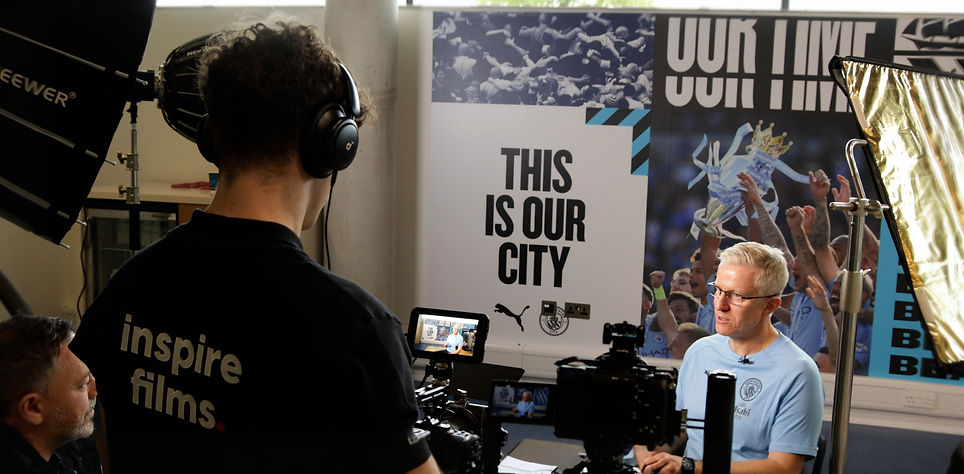
The filming day is where the project becomes real, but it should never be treated as a simple exercise in collecting attractive footage.
Nice shots are useful. They make the video feel professional and give the edit energy. But the strongest footage is usually the footage that says something about the business. That might be a founder explaining why the company exists, a customer describing what changed after working with the business, or a team member showing part of the process.
This is where the production approach matters. Some shoots need to be carefully directed. Others need to feel more natural and observational. A commercial campaign might require controlled lighting and repeated takes, while a childcare or hospitality shoot might rely more on capturing real moments without making the environment feel staged.
Interviews are often a major part of business video production, and they need to be handled properly. Most people are not used to being on camera, and telling somebody to “just relax” is possibly the least relaxing thing you can say to them.
A good interview process should help people sound like themselves, not like they are reading a paragraph from the company website.
POST-PRODUCTION IS WHERE THE STORY IS BUILT.
After filming, the project moves into post-production. This is where the footage is reviewed, the strongest material is selected and the video starts to take shape.
Editing is not just putting clips in order. It is deciding what the viewer needs to understand, what can be removed and how the story should unfold. A good edit has rhythm. It knows when to move quickly, when to let something breathe and when to get out of its own way.
This is also where music, graphics, colour, sound design and pacing all start to matter. These details can completely change how a video feels. The wrong music can make a serious business sound like it is launching a sports drink, and poor sound can make even beautiful footage difficult to watch.
For social media video production, the edit also needs to consider platform and behaviour. A video made for a homepage is not automatically right for LinkedIn, Instagram or paid ads. Different formats need different openings, lengths, captions and pacing.
THE FINAL DELIVERY SHOULD BE MORE THAN A FILE TRANSFER.
When the final video is delivered, the project should not simply become a link in an email and a polite goodbye.
A strong video production company should be thinking about how the content will actually be used. That might mean supplying different versions for different platforms, exporting the correct formats, creating captions, providing thumbnail options or advising on where the video should sit on the website.
This is where businesses sometimes waste good content. They invest in production, receive a strong final video and then use it once. The launch post goes out, everyone involved likes it, and then it disappears into the usual marketing noise.
Good content should work harder than that.
The main video might support the website, sales proposals, presentations and email campaigns. Shorter edits might be used across LinkedIn, Instagram or paid social. Interview clips might become separate pieces of content. Not every project needs endless versions, but the content should be delivered in a way that matches how the business actually plans to use it.
WHAT BUSINESSES SHOULD EXPECT FROM A VIDEO PRODUCTION COMPANY.
A professional video production project should feel organised, creative and clear. That does not mean every step needs to be complicated. In fact, a good process often makes things feel simpler for the client.
Businesses should expect more than someone turning up with a camera. They should expect help shaping the idea, planning the shoot, preparing contributors, managing the filming day, building the edit and delivering content that is actually useful.
They should also expect honesty.
If an idea is unlikely to work, the production company should say so. If the brief is trying to do too much, that should be challenged early. That is not about being difficult. It is about protecting the final result.
For businesses choosing a Manchester video production company, this is worth paying attention to. A good showreel is useful, but the process behind the work matters just as much. The way a company plans, communicates and thinks before filming will usually show up in the finished video.
GETTING THE PROCESS RIGHT.
Video production does not need to feel mysterious. At its simplest, it is a process of understanding what needs to be communicated, planning how to capture it, filming the right material and shaping it into content with a clear purpose.
The problem comes when businesses skip the thinking and rush straight to filming. That is when videos become generic. They may look polished, but they do not leave the audience with a stronger reason to trust, remember or contact the business.
A good video production process makes the project more focused, the filming day more productive and the final edit more useful. It also gives the business more value from the time, budget and people involved.
At Inspire Films, we create promotional videos, commercial campaigns, social media content, recruitment videos and brand overviews for businesses in Manchester and across the UK. Our process starts with understanding what the video needs to achieve before deciding what the production should look like.
If you are planning a video project and want the process to feel clear, creative and properly thought through, we would be happy to talk through what that could look like.